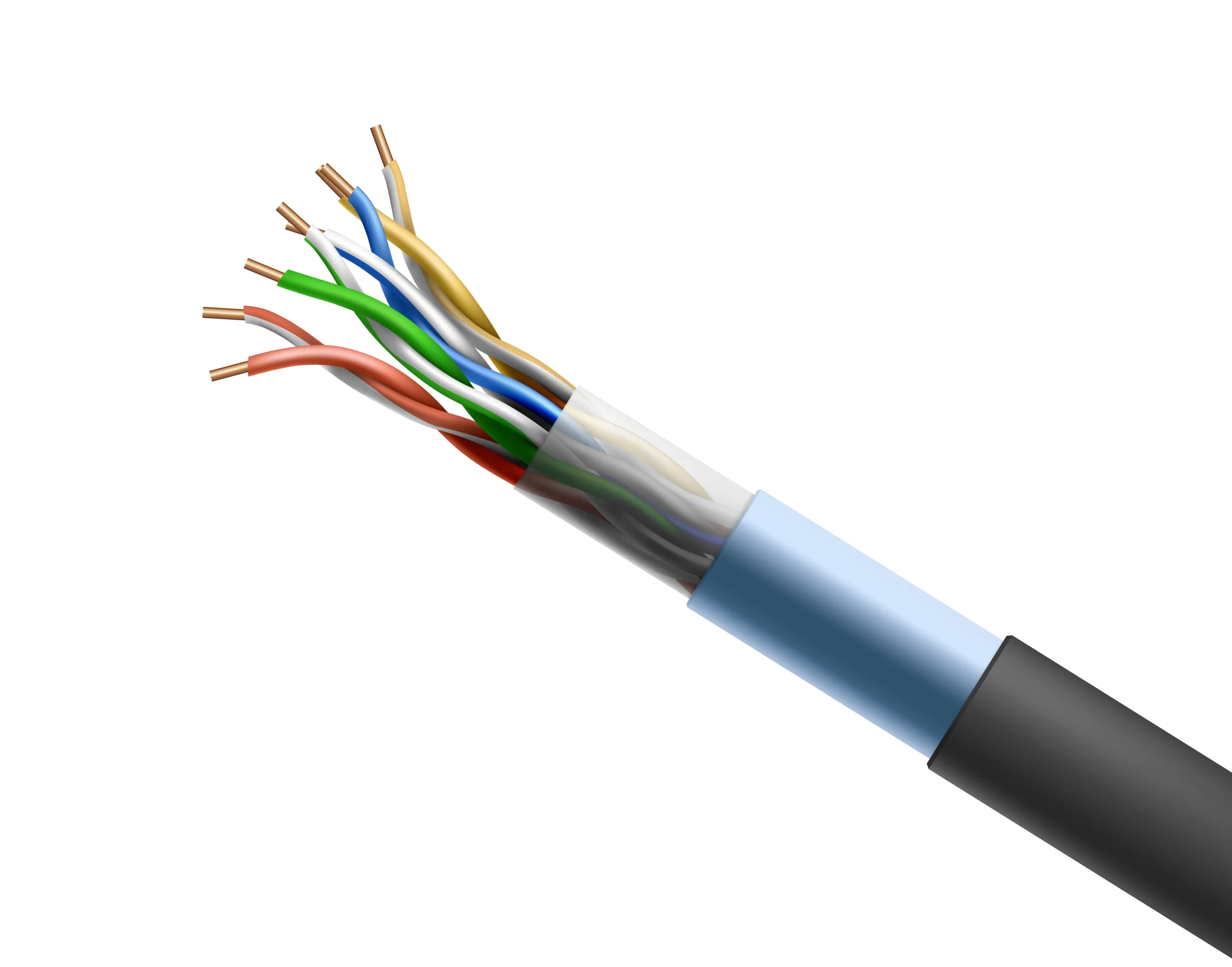
What Is Coaxial Cable?
Coaxial cable is a widely used transmission medium designed to carry electrical signals with high stability and minimal interference. It plays an important role in communication networks, supporting services such as television broadcasting, internet connectivity, surveillance systems, and radio frequency (RF) communication. Although newer technologies like optical fiber offer higher bandwidth, coaxial cable remains relevant due to its durability, reliability, and cost efficiency.
A coaxial cable is a type of guided cable that transmits signals in electrical form through a copper-based conductor. Its defining feature is the coaxial alignment of its inner conductor and outer shield, which allows signals to travel efficiently while remaining protected from external electromagnetic interference. This structure makes coaxial cable suitable for both residential and professional signal transmission needs.
Structure of Coaxial Cable
The performance of a coaxial cable depends on its layered construction:
- Inner Conductor: A copper or copper-coated wire that carries the signal.
- Dielectric Insulation: A non-conductive material that separates the core from the shield and maintains signal integrity.
- Shielding Layer: A metallic braid or foil that blocks interference and prevents signal leakage.
- Outer Jacket: A protective covering that safeguards the cable against physical damage, moisture, and environmental exposure.
Each layer works together to ensure stable signal transmission across various frequencies.
How Do Coaxial Cables Work?
Coaxial cables transmit signals by directing electrical current through the central conductor while the surrounding shield controls the electromagnetic field. The dielectric layer keeps the spacing between conductors consistent, which helps maintain proper impedance and reduces signal distortion. The grounded outer shield absorbs unwanted noise, allowing the signal to travel cleanly even in environments with heavy electrical interference.
Types of Coaxial Cables
Coaxial cables are available in several forms to suit different applications:
- Hardline Coaxial Cable: Thick and durable, designed for high-power and long-distance transmission.
- Flexible Coaxial Cable: Lightweight and bendable, ideal for general-purpose installations.
- Semi-Rigid Coaxial Cable: Uses a solid outer conductor for improved shielding and performance.
- Formable Coaxial Cable: Combines flexibility with structural stability.
- Twinaxial Cable: Contains two inner conductors, commonly used for low-frequency digital signals.
- Triaxial Cable: Adds an extra shielding layer for improved noise protection.
- Rigid Coaxial Cable: Fixed copper tubing used in broadcasting and high-frequency systems.
Types of Connectors
Different coaxial connectors are used depending on frequency, application, and equipment type:
- BNC and TNC: Common in video, radio, and communication systems.
- SMA, SMB, and QMA: Used in wireless, microwave, and mobile applications.
- RCA: Found in traditional audio and video connections.
- F-Type Connectors: Standard connectors for cable TV and broadband services.
Choosing the correct connector ensures minimal signal loss and reliable performance.
Uses of Coaxial Cable
Coaxial cables are used across many industries, including:
- Television and Cable Broadcasting
- Broadband Internet Connections
- CCTV and Surveillance Systems
- Video Signal Transmission
- HDTV and Multimedia Systems
- RF and Wireless Communication
Different cable grades such as RG-6, RG-59, and RG-11 are selected based on distance, frequency, and signal quality requirements.
Advantages of Coaxial Cable
- Supports stable signal transmission over moderate distances
- Resistant to electromagnetic interference
- Durable and mechanically strong
- Easy to install and maintain
- Capable of carrying multiple channels simultaneously
Disadvantages of Coaxial Cable
- Bulkier compared to newer cable types
- Requires grounding for optimal performance
- Higher signal loss over long distances
- Lower bandwidth compared to optical fiber
- Potential security risks if improperly accessed
Difference Between RG-59 and RG-6
- RG-59: Designed for lower frequencies and shorter distances, with lighter shielding and lower bandwidth.
- RG-6: Supports higher frequencies, offers better shielding, and is preferred for modern TV and internet installations.
Interference Issues with Coaxial Cable
Although coaxial cables are well-shielded, interference can still occur due to signal leakage, damaged shielding, or improper grounding. High-quality shielding and correct installation significantly reduce these issues, especially in high-frequency environments.
Difference Between Coaxial Cable and Optical Fiber
- Signal Type: Coaxial uses electrical signals; optical fiber uses light.
- Bandwidth: Optical fiber supports much higher data rates.
- Weight & Size: Coaxial cables are thicker and heavier.
- Cost: Coaxial cable is generally more affordable.
- Installation: Coaxial is easier to install and maintain.
Conclusion
Coaxial cable continues to be a reliable solution for signal transmission where durability, interference resistance, and cost-effectiveness are required. While optical fiber dominates high-speed and long-distance communication, coaxial cable remains an essential component in broadcasting, RF systems, and residential connectivity.